

8 Things I Wish I Knew Before My First Climbing Competition

Updated: Nov 15, 2025

Competitions are the major scene of climbing these days.
World records are being broken almost every competition, IFSC stadiums are teeming with over 50,000 spectators. And the best thing is, competing is a great fit for everybody - whether or not you're aiming for the Olympics one day.
However, the biggest challenge can often be to get the streak going and enter your first competition, whether it's a local scramble or straight-on Provincial circuit.
So, I think over my three years of competing within the country at bouldering comps, I've learned a couple of handy tips that make each next experience even better.
What we'll cover in this post (things to know before you go to a bouldering comp):
During the Qualifier (And Semi-Finals)
Brushing Holds (Before Your Attempt)
Take It Slow (4-5 Minutes is More Than You Need)
The Podium is Not the Pinnacle of Climbing - So Have Fun
Training Before
Of course, you don't want to come to a comp unprepared. Make sure your climbing ticks all the boxes so you don't make the same mistakes that I did and show up without even knowing what a four-point start was! ;)
Talk to your coach: This is probably my biggest piece of advice to you. Your coach has competed before (most likely); they will know what the format/rules are like right now and can guide you in making a good plan for the day. (See Point #5 for more details).
I like to spend a session just sitting down with my coach a week or two leading up to the comp and discussing what my goals are; how I'm going to prepare; what climbing skills I need to know; and etc.
Technical climbing: The biggest thing with competing is to feel confident in your own climbing. Enter a competition not when you're 100% sure you'll flash all the routes, but when you know you stand a chance in feeling satisfied with your performance.
You don't have to flash V10 to compete, but be familiar with basic technique and have a couple years of climbing experience under your belt.
Comp routes are wacky, weird, and often dynamic - practice a variety of bouldering moves to come prepared.
Visit different gyms around your area to get used to seeing different holds, different setting, and a different environment. This simulates a comp-like experience as far as it goes.
Knowing the crowd: Chances are, on your first comp, you won't know a single person there. But remember that all the other athletes have all been through this experience, and in a couple months even, you'll start spotting some familiar faces.
Ask around to find out who's going. Maybe you'll even make some friends to meet up with at the comp, and climb together! A simple "hello" can go a long way!
If your comp includes isolation, know that spending long hours in iso with your category can get boring after a while. Consider bringing card games and snacks for everyone to share, or just come with an open mind to meet new people there. And hey, even if you don't know a single thing about what's going on - just act calm, pretend like you know what you're doing, and ask somebody! You'll be surprised at how much camaraderie there is at climbing comps.
Practice that scenario: Showing up at a comp for the first time can be scary, so try simulating what it will feel like beforehand.
A great way to do this is with mock-comps on your gym's new set - mark a zone hold with tape or chalk, sit facing away from the wall so you won't see the beta, focus on topping first attempt, and have your coach (or a friend) write down your scores.

Warm Up
You will never climb at your best on the day of the comp, no matter how hard you train. That's usually just the way the atmosphere affects most people. But, warming up off-wall before the round starts will increase your chances of topping even the first couple boulders.
Stick to your typical warm-up routine, and if you don't have one, consider looking around to see what others are doing around you.
Most hang-boards, spray wall/kilter boards, and other equipment will probably get very busy, so get there as early as you can to get using those out of your way quicker.
However, if you know you will be spending a long time in iso, save the real warm-up until 30 mins before your turn so you don't cool down too early.
Remember to do a mix of dynamic AND static warm-up, because you want to feel ready to climb at your limit. (basic example: leg swings vs. touch-your-toes stretch - do both!)
With some exceptions, often you won't have time to do your usual on-wall warm-up routine at a comp, so do whatever you can before you climb to feel equally ready.
This could mean using the designated warm-up spray wall for some circuits, doing dead hangs on jugs, or even adding some workout elements like jumping jacks and a few pushups.
Your goal is to feel ready to climb at project grade right away, because it will make the whole experience much more pleasant.
Pre-Climb Coping Strategies
It's perfectly normal to feel nervous and shaky before you climb, especially if it's in a setting you're not used to. But there are a few things you can do to make yourself calmer before your attempt:
Talk about it! In scramble comps especially, I like to walk around in a group of friends, so I have people I know to discuss beta with and get the nerves out. Everything just starts to seem twice as simple!
Brush the holds to gain an understanding of which ones are more incut, how far the next hold is and etc. (See Point #6 for more detail).
Tell yourself that it's just a normal climbing session. Often climbing in front of a crowd will make you nervous, but pretend like it's just any day at the gym and you know every single person there.
Watch others, if you can. It'll be rare to see your first comp be a 5-on 5-off or WC format, so you'll probably be able to interact with other people and watch their beta.
Remember that it's okay to fall. You won't flash every climb (unless you're just really good and really lucky!), so instead, make it a goal to send within 3 attempts or so.
During the Qualifier (And Semi-Finals)
In a modern comp format, the qualifier is the first thing you're going to face. It's different for every age category and country, of course, but most often, for the younger youth, you'll most likely have a modified scramble format.
While the qualifier is important, you want to remember to pace yourself.
For example, if you have Finals the day after next, you know your body will have some time to rest before the big day. In reality, the qualifier is really only there to GET you to Finals. In the end, your first scores won't matter as much as the end scores will (the judges refer to qualifying results as tie-breakers only).
To summarize that, 'trying hard' in the qualifier is not the same as 'trying hard' in Finals - or in semis, even. A decent number of tops and zones will grant you a ticket to Finals with flying colours, but you'll want to save most of your energy for the big day. Setters usually follow a kind of pattern - soft routes for the first round, difficult for semi-finals, and moderate for Finals - or vice-versa.
Focus on flashes during the first rounds, to minimize your attempts. If the set isn't very balanced (which is often the case for competitions), there WILL be lots of ties - and your attempts are what will matter most.
Your goal should be to make the quota, not place first. Your qualifying place only matters as a tie-breaker in the end, so it's up to you if you care about coming first or last, really.
Know your format well, so you don't stumble upon any sudden surprises. Look into whether you'll be competing in scramble format, or with iso, and what time check-in starts at.

Listen to Your Coach
If you have a coach who is available to be present on comp day, absolutely take that opportunity - and remember to thank them for it, too!
As I like to think, coaches work magic. They know how you climb on a regular basis, and just seeing their face in the crowd can help you calm down by a lot.
Talk with your coach about your plan for the competition. If you can, consider bringing a small whiteboard so you can spend some time drawing a diagram of your strategy, such as in what order you're going to try all the boulders.
What a lot of people tend to do is start panicking, rushing to the next climb, and forgetting their entire strategy. To avoid that scenario, stick to what your coach planned at the start and keep a cool head.
Athletes travelling with teams will have the advantage of constructive warm-up, and tips from coaches that have many years of experience in the competitive field. But that doesn't mean you can't do so as well, even if you're competing by yourself!
Listen to what other coaches are saying to their athletes. They might have a different perspective onto the comp!
There's nothing wrong with hanging around the area where other coaches are and quietly taking in what they are saying about the boulders or the strategy. Maybe even walk up to them and ask some questions!
Walk around locating all the climbs, and sequencing the routes (if you have a preview period, of course). Remember that you are allowed to touch only the 4-point start, just keep your feet on the ground.

Brushing Holds (Before Your Attempt)
As I briefly talked about in Point #3, brushing holds is a crucial thing to remember before you climb. As more and more people try your boulder, chalk and grime from shoe rubber will build up on the holds, especially affecting slopers, volumes, small footholds, and pinches.
The judges don't care why you fell - even if it was because the hold was too chalky and your hand dry-fired. "It's not my fault" isn't an option.
That's why you want to reduce the chances of this happening and always, ALWAYS brush before your attempt. This is probably my biggest tip of them all, because it's not something very obvious but makes a huge differences. There are a few benefits that come with this:
It gives you a better understanding of the climb itself. When in comps you won't be allowed to leave to ground without it counting as an attempt - and sometimes you won't know how good a hold will be - brushing it can give you a sense of what it's going to be like.
To some climbers, brushing is like meditation. When all the eyes are on you and the clock's ticking off, it's actually quite calming to just take a moment to breathe and brush the holds you'll be climbing on.
Again, it reduces the chances of falling. Nobody likes an extra attempt marked on their scorecard just because the volume on slab was too grimy and your shoe slipped off.
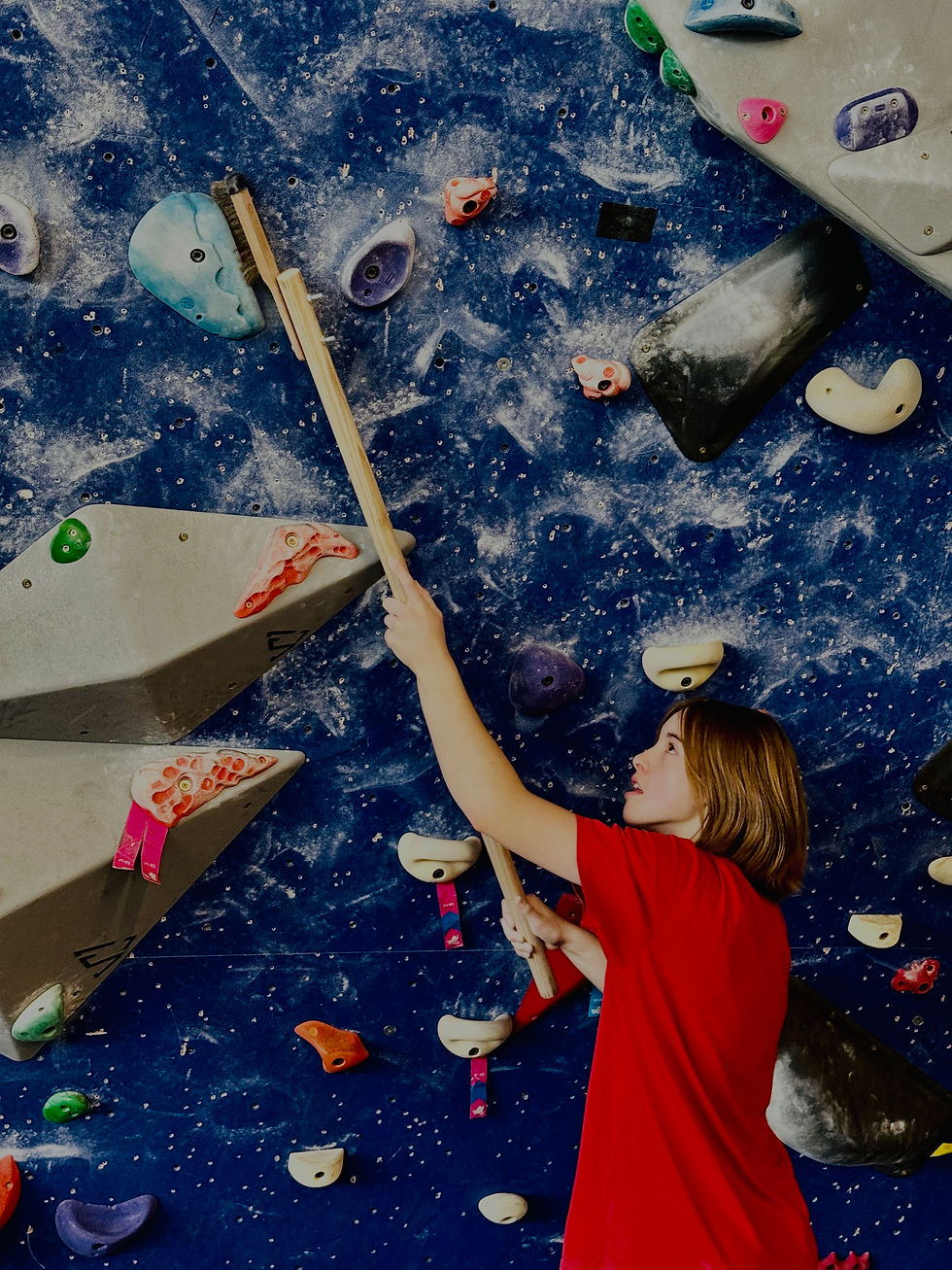
Using a tall brush for a hold you'll be dynoing to can help you gauge the distance, without actually measuring it.
Bottom Line: Never be too lazy to brush ALL your holds. Sometimes it's annoying to find the tall brush, reach for a weird-angled hold, and spend that extra minute of effort scraping off other people's chalk. But you know what? You'll never know if the brushing pays off until you reach the hold! :)

Take It Slow (4-5 Minutes is More Than You Need)
If the comp you're headed to is a scramble without isolation, you're more than welcome to just skip through this point. However, if you know your format will only give you 4 or 5 minutes on the wall, make sure to take time and read through.
First of all: Why would you only get 4 or 5 minutes?
It depends on your format. 4-minute World Cup and 5-on 5-off are both very common formats for more formal competitions. You'll be in isolation until it's your turn (going in backwards order from the qualifying quota), and when you're in front of the wall, you'll get a couple minutes for attempts until moving on to the next boulder.
Remember, 4 minutes per climb = preview before. 5 minutes per climb = no preview.
Is that really enough time to send?
In reality, yes! It's more than enough time to walk up to the judge, look at your climb, brush the holds (or have the assistant brush them for you, if that's the case), and get a few attempts in. Also, never be afraid to go back to iso before your timer rings, if you feel like you're wasting attempts and getting yourself wiped out without progress. No one's going to judge you for doing that!
What should I do if I keep falling, and there's little time left?
Don't panic. Whatever you decide to do, keep a clear head and think back to your strategy that you (*hopefully!) planned beforehand. To avoid the scenario where you actually start running out of time, take according rests. I like to space it out this way:
Sequence boulder, brush (<30 sec) --- Attempt #1 (<1 min) --- Sequence boulder again, rethink beta (<15 sec) --- Attempt #2 (1-2 mins) --- 15 sec rest --- Attempt #3 --- 30 sec rest ---Attempt #4 --- Timer rings.
You will get progressively more and more tired during your time to climb, so realize that if you don't top in under 5 attempts, it might do you more good to just cut it and go back to iso.
Secret Tip: What a lot of experienced Finals climbers will tell you is that there's actually a really easy way to tell if you're doing the "right" beta.
While you're in iso, it's rare that the comp will have a completely soundproof wall between you and the wall (unless it's the World Cup, of course!) - so listen to hear loud cheers or disappointed 'Ahhhs!'. You'll be able to tell if the climber topped the boulder or fell off, and you can use that to figure out if it's an easier route or not - without even asking anybody!
When you're climbing, the spectators in the crowd will, without even knowing it, cheer even louder when you get closer to doing what the person before you was doing - especially if they topped. So, if you hear the cheers get louder and louder, it might be a signal that you're on the right track.
Just keep in mind that this can backfire really easily, if the climbers before you completely misread the beta and made it twice more complicated. So, trust your gut; and in the end, don't let the cheers and the commentating distract you.

The Podium is Not the Pinnacle of Climbing - So Have Fun!
Lastly, JUST HAVE FUN!
It's just your first competition, so you'll have plenty of more ahead of you to get even more knowledge about making the next comp even better.
For example, on my first SCBC comp in 2023, I placed 12th. Out of 14 YC girls. Yeah.
But hey? I still had a great time! And I'm 100% sure you will too.
Now, do you have any more tips about how to make your first comp a good experience? Share it in the comments below!
-- Sophia

Comments