

Becoming the V8 Climber - Tips to Send Your Project

Updated: Oct 1, 2025

Close your eyes for a moment and imagine that one boulder or route we all know you have - the one you just can't send! Maybe you've spent a few sessions at the crag working on it, or perhaps you gave up as soon as you fell - but it's still there in the back of your mind.
Perhaps it's a technical slab V6, or maybe it's that dyno everyone's trying on the new set. Either way, it's still your project - and while getting the long-wanted send is hard work, the payoff is bigger than you think.
Projecting is fun and exciting - and it's also a great way to boost your climbing. So whether you're struggling on your outdoor 12b route or you're wanting to just become a smarter climber - read on; I've found a few handy tips to make projecting more successful.
First of All... What Really Is a Project?
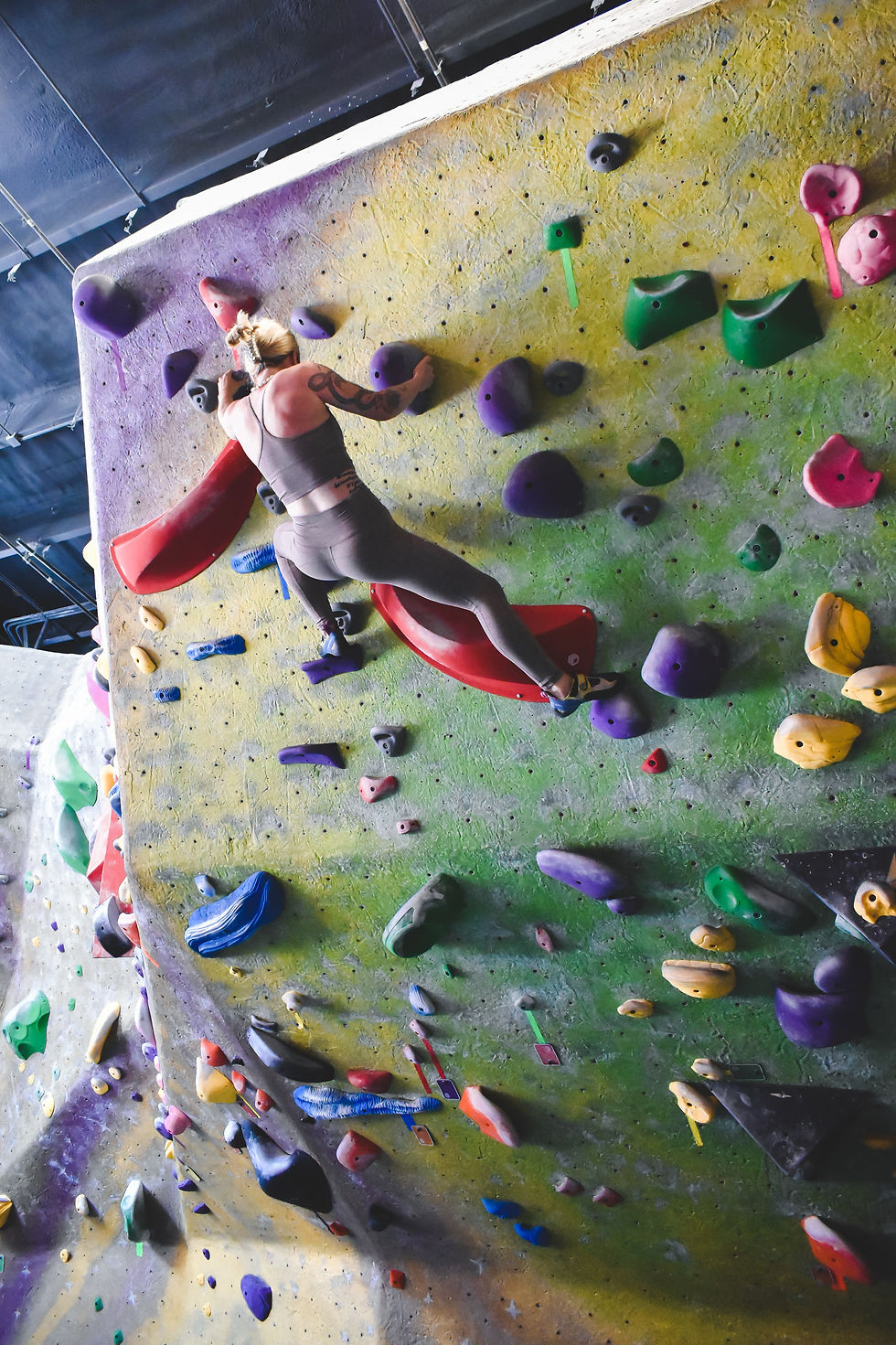
Before we get into the few tips I've summed up for you, let's spend some time figuring out what is actually considered A PROJECT.
If you ask any climber, a project is any climb you've been repeatedly attempting over a lengthy period of time - anywhere from two or three sessions to a couple months - or years, even. It's extraordinary to realize how far some climbers go in order to send their own projects.
And hey - your project doesn't need to be hard. While experienced climbers often seek the hardest problems in the gym to work on, if you're just beginning to climb, don't hesitate!
Bottom line: It'll do you more good to attempt routes that challenge you specifically, and you'll learn more along the way.
Take a moment to imagine those insane top-notch routes climbers have accomplished over the years. From Silence (5.15d) in Norway to Meltdown (5.14d) in Yosemite Valley, the arguably truest form of climbing itself lies in trying climbs much too hard for you - and falling, falling, falling, until one day - you send. Even longer routes can take a long time to achieve - for example, it took Tommy Caldwell just under 8 years of consistent effort to accomplish his massive Dawn Wall project.
But of course, you don't need to go all out and project 5.14s or inch upwards on El Cap for days. You can work on a climb in your local gym and call it a project! But now the challenging side - what do you do if projecting seems too hard and too frustrating?!
7 Tips to Approach Successful Projecting

Spare the Meltdowns:
It will take a while, trust me. And a lot of effort, punching things, and stomping around. And a lot, lot, lot of falling. Yet still - in the end, it'll be more rewarding than you think.
That's why when you're working on a climb you can't quite send, it's important to be willing to keep calm. You might not always be climbing the way you think you will on "the day of the send." Perhaps you'll get injured and miss a few sessions, or reset day will come sooner than you thought. Or maybe your only free weekend will be rained out - and you'll miss the clear weather window.
I get it - it's hard not to crash out when it seems like your only-only-only opportunity to send was missed. However, taking a breath and facing it with a clear ming will benefit you much more.
Maybe try thinking about the move you DID succeed on. If you fell off the crux, focus on everything BEFORE the difficult part. Or take a rest and get your mind on something else - whether it's short-term like taking a few minutes to chat with friends, or long-term like doing another activity. Whatever your strategy is to stay calm, stick to it, and you'll find yourself more successful.
Plan It Out:
Instead of saying, "I'll just see when I get there," try planning ahead. For instance, when American rock climber Margo Hayes became the first woman to send 5.15a (La Rambla; Siurana, Catalonia) she had a 'model' of her route hanging on her doorframe for weeks. Margo would use the sheets of paper to draw out key holds in the climb, and write small notes to what beta she could use. (https://www.youtube.com/watch/Margo Hayes Makes History - First Woman to Climb Biographie, 5.15)
We all know that when you have a project, you just can't keep it off your mind - but instead of just thinking about your climb, focus on what you can do to be more successful. This could be really anything - it's totally up to you, whatever works! Some ideas could be:
- Making a Calendar: split your route into pieces and "schedule" them. For example, you could try - just TRY - to reach hold #10 by next week, then clip the 8th draw by the week after - and soon enough, you'll have a mental schedule that your mind will follow.
- Orient Your Training: Refer to Tip #5 for more details on this, but another good idea is to focus on exactly the kind of exercises that will benefit your climb. For example, pistol squats work excellent for slab, and dead-hangs improve finger strength. Consult your coach, physio, or a trusted friend before you attempt any severe workouts, though - doing an exercise improperly could seriously harm you and slow down your sending progress even further.
- Just Draw: If you're a visual learner, sketch your climb! This could be anything from an elaborate drawing to a few quick pencil marks. It'll help you visualize the route, and allow you to remember important sequences easier. (This goes for both boulder and difficulty, believe it or not!)

Projects can take a while! Image credit: Vecteezy Be Realistic:
Remember, don't set goals you know you physically can't achieve. You have to keep this in mind if you're keen on Tip #2, because guess what's actually ten times worse than not sending your project? Overestimating your skills. Think of the location of your climb; your travel opportunities if it's far away - or how much time you have to work on it in the gym. Perhaps it's not a good idea to plan for sending the crux in two days if you only have one 1-hour-long session available. Also, don't try to redpoint a 14b if you KNOW you're barely scraping up a 5.11. No one can determine what you climb except you - and while it's good to challenge yourself, keep it possible.
Keep an Open Mind:
Sometimes, projects don't unfold the way you planned them to. You may get injured, the weather may not be good, or just the amazing beta everyone's been using doesn't work for you. Instead of throwing a tantrum and giving up - like I mentioned in Tip #1 - try to stay open-minded. If something doesn't work, try to see it as a learning opportunity rather than another roadblock. In fact, recent studies have shown that the majority of people who succeed at something have failed at least four or five times before.
If it helps, talk to your friends! We've all heard of the famous "send train!"
If you prefer keeping to yourself, listening to some of your favourite beats can help ease the pressure and get you back on your feet in no time. For the science behind it, according to harmonyandhealing.org, listening to music reduces your cortisol levels and aids the release of dopamine, a neurotransmitter associated with calmness and pleasure.
Stay positive, and if you accept changes and roadblocks in your route as they are, they'll begin to seem less life-changing and more exciting!
Get Inspiration:
Talk to friends! It's incredible how seeing someone you know work on the same climb as you can completely change your perception of it.
Or, even better - get googling! While climbing is still developing, there are plenty of YouTube vids out there, SuperTopo forums to discuss, and documentary films with National Geographic. Remember though, the Internet CAN be biased, very much - so don't trust every word you find on there.
Train Harder:
Refer back to Tip #2: Training DOES help. And again, make sure it'll be something you know you can achieve after some effort - if you know you won't have the determination to do thirty pistol squats a day, don't say you will. But you also need to understand that projecting is something that takes a LOOOONG time - and so does training. Doing no-hangs on your hangboard for 1 week won't have you seeing any change unless you keep at it for a lengthy period of time.
A good way to remember this is with an acronym: TRAC0
T for Treats: Eat healthy! Satisfy your cravings of fat-rich foods with nutritious alternatives.
R for Redpoint: Climb other things too, not just your project. Work on redpointing similar routes!
A for Ambition: You won't want to train unless you're motivated. If you don't feel a drive to get better at climbing, simply don't attempt training! It'll only work if you have a specific goal you want to reach.
C for Consistency: You won't see progress unless you keep at it.
O for Opportunity: Take every chance you get, but take it wisely. Don't overwork yourself (Tip #7), but attempt as much as you can.
Rest, Rest, and Rest:
As much as you want to engage in consistent training to send, you also need to rest. It might suck to be the only one sitting at home during the one sunny weekend, but rest doesn't mean stay-home-day. It's a common misconception that you don't have to follow. Make a routine that allows you to train as much as you can, but balance it with intermittent rests during which you still do what you love. Your rest day could honestly mean just coming to the crag with some friends and belaying for them!

Hiking and spending time at the beach are some of my favourite rest day options. Here I'm walking down the beautiful Mystic Beach on a weekend day trip. Why is Projecting More Beneficial For Us?
Of course, we all LOVE to flash and onsight routes. There's nothing quite as satisfying as the knowledge that you are capable of perfectly executing a climb, first try, with no prior knowledge.
But long-term, projecting will do you more good than the typical onsight.
- It aids your climbing skills. According to an interview with climber Migue Sancho on https://www.mapotapo.com, projecting increases your onsight skills.
"Projecting teaches you a lot of skills that will help your climbing more generally: self-efficacy, executing hard moves when tired (and maybe a little stressed), falling when trying hard. It can really help you push your onsight grade," Sancho, a mountain guide based in Granada, Spain, says.
- It helps you learn skills for long-term climbs in the future. "If you do decide to try a project, my tip is to start with a ‘mini-project’ – something that you can send in 2 to 5 attempts – and build from this," Sancho explains.
- It's a big punch towards your ego. While easily topping every climb within a session can feel truly remarkable, projecting is what will teach you to keep trying.
- Projecting makes you mentally stronger. According to https://eveningsends.com, projecting isn't always a natural "thing" for every climber. For some, it can feel dreadful and monotonous and tedious to constantly fall off a climb. Andrew Bisharat, Colorado-based writer and climbers says, "Projecting makes you a better a climber. It really does. Not only that, but the process of working a route can reveal certain strengths and weaknesses that you don’t see elsewhere."

So, in conclusion, projecting doesn't always have to be this obligation you have to be a good climber.
Of course, it has its benefits, and honestly - projecting can sometimes be really fun (Especially if you enjoy the route!).
But even if it's not something you enjoy, it's important to remember that doing things which aren't our favourite is what makes us better climbers.
And now, go grab your chalk bag and a pair of shoes, and head off to send your projects!
:)
— Sophia


Good points 👍