

Dressing in Layers for Your Alpine Multipitch Climb


Are you planning to climb a multipitch?
Where - and what time of year - are you climbing?
The better question: ARE YOU DRESSING PROPERLY FOR THIS CLIMB?
In this post I'm going to be talking about how important it is to dress correctly for being in the alpine, and most of the time, this means dressing in layers.

What does it mean to "dress in layers"?
Most climbers will know that temperatures can vary significantly in the mountains.
It can be below zero at nighttime and early morning; yet as soon as the sun comes up, the ice will melt and all of a sudden you're sweating on every belay. ;)
Wearing "layers" means layering your clothing in a way that lets you take off according layers to adjust to the temperatures, weather, and other conditions. It's a more flexible way of dressing for your climb.
Think of it this way: would you rather wear one thin sweater, then spend all day either shivering in it, or wishing you could take it off? OR would you rather wear a t-shirt, sweater, and windbreaker on top that you can take off if it gets too hot?
It's important to dress like this because of a couple key points.
It's lightweight. Most outdoor people will know not to being cotton or any heavy, bulky clothing items on their trip. Instead, choose compact alternatives such as synthetics - which absorb moisture and dry fast - and merino wool, which contains warmth for longer.
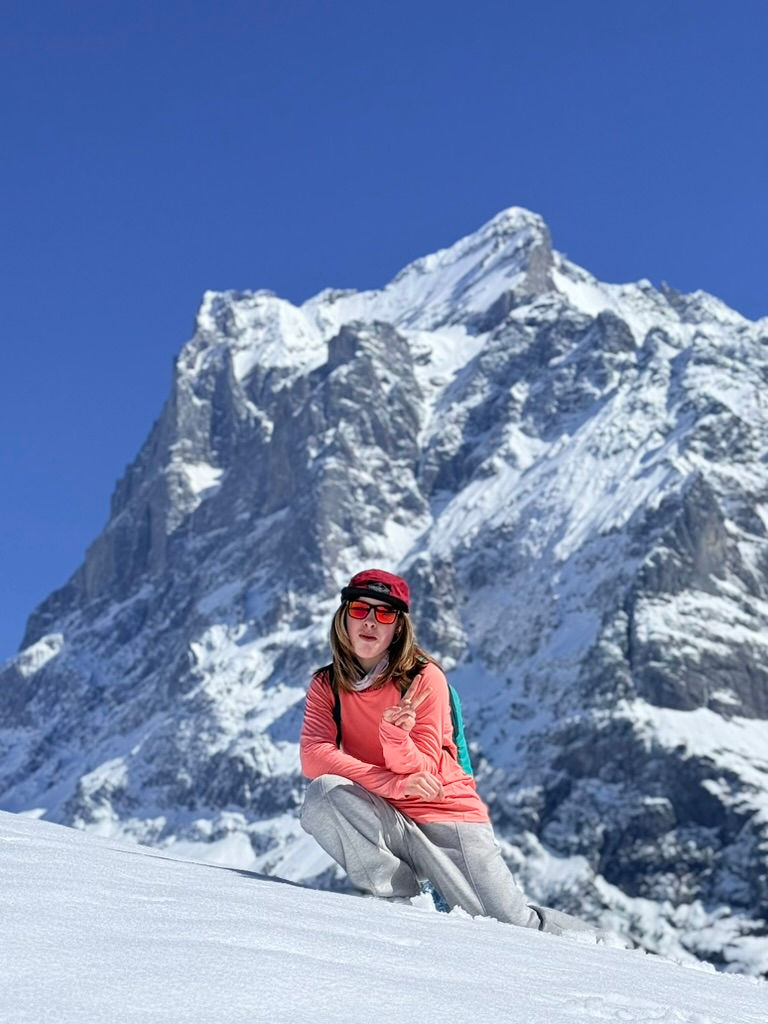
It's bright. Why do alpine climbers in movies always wear red and orange? Because bright colours = visibility. This is even a safety connection: if, in an emergency situation, you need to be rescued; you don't want to blend in with the surroundings. Know that white blends in with snow; black/gray/blue looks too similar to rock; yellow might not stand out as much; and green looks like a bush. Anything neon will work, really, but I personally prefer pink, red, and orange - colours that don't naturally occur on a mountain!
It regulates temperatures efficiently. In the morning, it's going to be cold on the wall. You can put on your down jacket. When you start climbing, you'll warm up soon enough, but taking off too many layers means losing valuable heat. So, you can switch out the jacket for a thinner windbreaker. What I mean is, having several layers of different thickness and material allows you to gauge the weather around you and decide what you want to wear at the moment.
It saves time on the wall. Instead of wasting valuable minutes to find a sweater in a pack, take off the jacket, and replace it with a sweater; you can cut down on those steps by wearing everything already.
Basically, not to think too deeply about it, layers = efficiency. And this is what I'll be taking about in this post.

The logistics of your alpine climb
Before we get into how I personally recommend layering your clothing, we need to figure out WHERE, and WHEN you'll be climbing.
(Believe it or not, "alpine" is determined by the altitude and general elevation of your climb, not whether it's snowy or not - though most people do tend to associate it with such.)
Hotter, southern routes: Essentially, don't pack too heavy. Resort to synthetics as these dry quicker, and bring a mix of shorts, t-shirts, and long-sleeves to protect yourself from the sun. For example, places like Madagascar, El Portrero Chico, Zion National Park, and Verdon Gorge are all nearly tropical themselves. Most likely, you'll be looking at a trip with sun and clear skies - but that depends on your location, essentially. Keep in mind that lush, moist rainforest climbs often get submerged in fog, which soaks through the route itself and your gear - so it might be handy to bring some gore-tex gear along too.
'Mid-season' semi-alpine routes: Think anything that isn't below-zero, and it's unlikely you'll have to traverse a glacier - but the weather might still vary significantly. For example, places like Half Dome and El Capitan in California won't have ice and rime spraying from their summits - but be prepared for cold nights and hot days, depending on season. Temperate climates such as Yosemite, Squamish, and the UK can all be melting pots in the summertime and freezing in the winter. Check local weather forecasts and plan for many last-minute changes based on conditions at the time.
Cold, high-altitude routes: This is typically what people picture when you say the word "alpine." These routes can be the pinnacles of someone's climbing career, and therefore require a great deal of experience and personal gear to be successful. If you're heading off to anywhere like the Bugaboos in BC, Patagonia, the Alps, the Himalayas, or anywhere north - like Alaska, Baffin Island, or Greenland - you're in for a tough trip. It's ultimately important to wait for a clear weather window and know when most people go - to catch the mountain at the right time of year, and have others be around you in case of emergency. Some governments only issue permits at specific times of the year, and the mountain is closed to the public otherwise - the May pre-monsoon summit season for Everest, for example.
I won't be covering preparation for high-altitude climbing in this blog post, as I myself have very minimal experience with that - but you'll want to pack a bit more than what I'll discuss here for sure. Full downsuits, ice axe/crampons, and other alpine gear is definitely required for this type of climbing.
My step-by-step recommendation
As I mentioned earlier, this blog is the one you need if you're looking for semi-alpine, temperate-weather type multipitch climbing. Of course, you will be - or should be - bringing much more gear with you than just this; for I intend to cover a one-day approach to dressing in layers. Know that you should always bring emergency clothing and store it in your haulbag/pack - and, for shorter multipitches where you won't be camping, consider only bringing one pack to increase efficiency. It's all in your hands!
And so, without further ado, this is how I recommend dressing in layers for an alpine multipitch:
#1: Base Layer
This should be warm, tight-fitting, and comfortable clothing. I like using merino wool for mine - take a look at the brand that we've been wearing for years, https://www.weewoollies.com.

#2: Comfortable climbing pants
Your go-to climbing pants, something with pockets and a wide waste band to wear a harness over. If you're climbing in colder conditions, you might consider adding another layer here, bringing gore-text raingear for wet climbs, or wearing a downsuit if there will be snow/ice/glacier travel.

#3: Comfortable long-sleeve shirt
Remember, always synthetics. I prefer to wear my long-sleeves with hoods, as that adds another layer of warmth around my head - and extra sun protection too. Take a look at the Outdoor Research long-sleeves, these are my favourite for multipitching. https://www.outdoorresearch.com

#4: Warm sweater
Your next layer is probably what you'll be climbing in for the day, so it should be warm and thick but not overly bulky. I try to go for something woollen, or fleece.

#5: Bandana over head and neck
This is important as it protects you from high winds, and keeps extra warmth too. Use a woollen or synthetic bandana to slip over your head like a hood - and ta-da!

#6: Windbreaker & Sunhat/Sunglasses
The windbreaker: If you're in the alpine, there's certainly going to be 2 things: wind, and direct sun reflecting on ice. I always pack a visible (brightly coloured), lightweight and compact windbreaker with me, as it keeps me warm and doesn't let the wind through.
The sun protection: If you've looked into alpine climbing, you've also probably heard of snow blindness. This is a painful, temporary blindness scientifically called photokeratitis, that's caused by overexposure to UV rays. This is why we wear sunglasses when on the water on a sunny day - and why mountaineers always wear strange-looking goggles. Because of this, it's REALLY important to bring proper polarized sunglasses with you on your climb - and, though I consider this optional as you're wearing a helmet too - a sunhat if you wish.

#7: Harness & Climbing Gear
As you see here, I've exchanged my sunhat for the long-sleeve's hood, as I know I'm also going to be wearing a helmet. Next comes the important stuff - your harness (preferrably comftorable enough to sit in for many hours) and the rest of your gear; PAS, shoes, chalk, belay, jumars, rack, and etc.

#8: Helmet
I know that most people sport climb without helmets - which is perfectly fine. But when you venture out into the alpine, there are many more hazards than at your local crag. This is why it's extra important to wear a proper, certified climbing helmet when you're on the wall - you can never mitigate the risk of falling objects from above, such as deadly rocks or sharp ice and rime.

#9: Headlamp and Daypack
The headlamp: If you're going to be climbing into the night, wear your headlamp on the helmet right away. Even if you're not planning to - bring it anyways. You can never be sure enough what's going to happen, and it's always better to be safe than sorry, as they say!
The daypack: If this is a multi-day bigwall, essentially you're going to have haulbags, static ropes/haul systems, and other backpacking equipment along with you. That's taking it to the next level already.
But even then, you're still going to need a small and light daypack with you for at least one person to wear during the day. This should be compact when stored, and able to carry at least 2 litres of water (I always go with a trusted hydropack), snacks for the day, extra layers of clothing, an emergency communication device, and your headlamps (if you're not wearing them already).

And these are my 9 steps that I like to follow when I dress in layers for an alpine multipitch.
Do YOU have any more tips that I've missed, or think you have a better strategy?
Drop it in the comments below!
Have fun multipitch climbing! Stay safe 'up there'!
-- Sophia


SLAY ALL DAY!!!
Love it 🔥