

Summer Backpacking Essentials: 6 Things I Am Never Hiking Without


Heading out into the backcountry is an exciting experience across all aspects. But your dream summer hike can quickly turn into a sweaty, scorching hot experience - and when Search and Rescue gets involved, both you, your wallet, and your partner are going to cry.
Backpacking will get easier over time; nobody's first hike is ever perfect. You'll likely have a massive pack, too much of everything (food, clothes, etc.), and perhaps even a couple blisters. Effective, efficient, and ultralight packing is a skill that takes years to achieve, both financially and experience-wise.
That being said, there's no need to invest in that $800 hardshell and $2,000 tent right off the bat. Give yourself time, borrow gear from friends, and over the course of many hikes you'll be able to refine your systems and figure out what's most important for YOU.

However, even on your first summer backpacking trip, there's a couple things you should never-ever leave the trailhead without. Of course, that includes (should always!) the typical safety-related gear:
Communication device, NOT dependent on your phone: Garmin, ZOLEO, etc. (phone batteries can die)
GPS, Compass, Printed topographic map (same reason, downloaded maps depend on phone battery)
Flagging tape (ALWAYS!)
Duct tape
Pocket knife/Swiss Army knife
Whistle
Bear spray/Bear bangers
Headlamp
Fire starter (ones that work in any weather/any altitude, e.g. ferro rod)
Water purification tablets (additionally to your regular water system)
Yet these are the things that any guidebook and any blog are going to tell you to bring. What nobody ever tells you is the little things, the tiny details that make your hike SO MUCH EASIER.
So, here it is - the complete list of my top 6 summer backpacking essentials that I am (never!) hiking any trail without:
BUFF or BANDANA
FOLDABLE HAND FAN
PICKLES!
SUN HOODIE
GRAYL WATER BOTTLE + GREGORY 3D HYDROPACK
ONE TREKKING POLE (keep the second one stashed in your pack, folded)

BUFF or BANDANA
Lightweight, synthetic, and breathable, you won't even feel this bandana around your neck. You can buy the perfect summer hiking bandana for $30 at your local outdoor store, and it might last you a lifetime (warm fleece buffs for winter backpacking/ski touring/mountaineering are also a must-have!). And it's so much more than just style...
Sun protection: probably the biggest one of them all! Bandanas keep you protected from dangerous UV rays, plus shelter you from wind, rain, snow, or whatever other crazy weather the mountain might throw at you (even in the summer!).
Bugs: I'm not kidding... bug nets are great, but hiking in them all day is annoying at all costs. This one is big if you're hiking at lower elevation, next to inland water sources (lakes, rivers, tarns), or camping in an area that isn't blown by wind. Lift your buff and cover your ears, face, and chin... paired with a sunhat and sunglasses, only your nose will get all the mosquito bites!
Icepack effect! This is the ultimate LIFESAVER. The moment I discovered this trick, that was when I realized I'm never hiking without my buff. Summer backpacking or hiking in hot weather can get horrible - and dangerous - fast. Pick a slow-drying bandana on purpose and soak it in the first available clean-ish water source, then wear around your neck all day long. Not only does this prevent heatstroke, but it also keeps you comfortable and cool during a lot, hot-temperature hike.

FOLDABLE HAND FAN
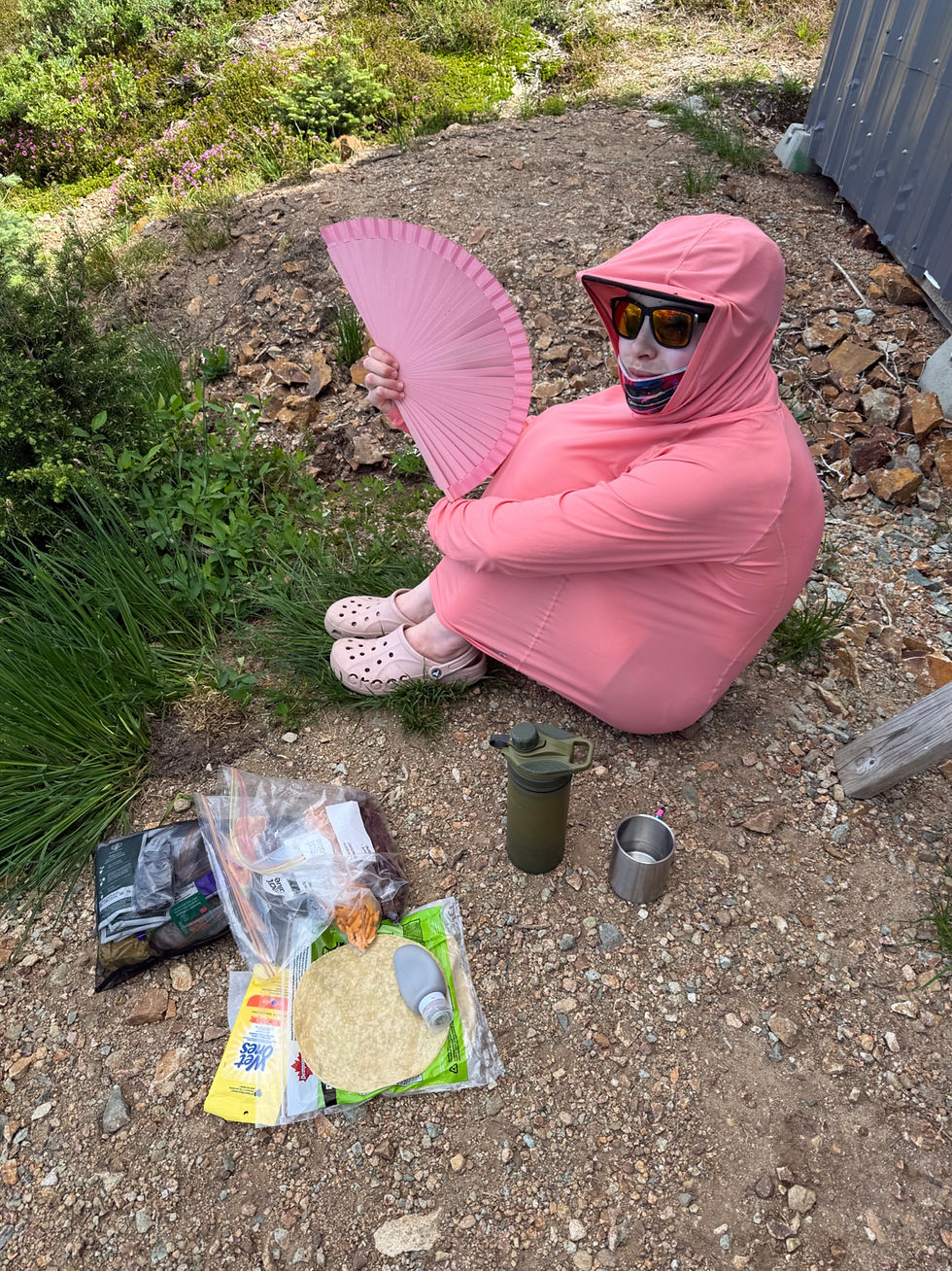
Another hot-weather hiking tip! Exposed, windy ridges and higher altitude are an issue of their own, but when you're approaching through long, stagnant valleys - that breeze is all you're dreaming about.
When you're beginning to explore the backcountry, chances are, you're likely hiking/climbing in the summer. Temperatures in interior BC can easily get up to 30° to 35° C in the dry months, and that's not exactly ideal for a long day of approaching.
Benefits of carrying a small, lightweight, foldable hand fan (not the bulky plastic kind):
It's light. You won't even notice it in your pack.
It's an efficient way of regulating body temperatures - you won't even need to stop to pull it out of your pack's side pocket
It helps escape the bugs: fanning wind around your face when sitting at camp is, well, another alternative for mosquito-y environments!
PICKLES!
Everyone talks about trail mix for backpacking. But what actually happens on the trail (for a lot of us on the most part), is that long days of hiking in the sun makes your body sweat and rapidly lose sodium, an essential aspect of energy production. Without replacing vital minerals that you lose when hiking, you risk heat exhaustion, muscle cramps, and other dangerous conditions.
That doesn't mean you shouldn't bring candy, trail mix, and other sweets when hiking. What you really do need is a balance of snacks that efficiently replenish all aspects of energy and keep you fuelled throughout the day.
Personally, I find that when I'm hiking/climbing/scrambling for long periods of time, I start craving salt more than sugar. Crackers, beef jerky, and hard cheeses are all good options... but the best one is pickles!
Pre-packaged, no-brine, ready-to-snack pickles have been the best backpacking snack and lunch addition I've found. Here's why you should bring pickle pouches on your hike:
They're easy to carry! Skip the heavy pickle jars (of course), instead, look for 'snack' pickles that aren't too bulky or messy in your pack.
Pickle pouches are designed to live on the shelf for several years. They'll absolutely last for several days unopened without refrigeration. (Once opened, you should consume the pouch within a few hours/same day).
Pickles provide a crucial dose of sodium when you hike. Paired with electrolytes, and balanced with sugar (eg. gummy worms), this makes a great backpacking day.
Taste contrast! Most backpacking food is dominated by dehydrated meals and sweet energy bars. Eating the same rehydrated food for many days straight sometimes even results in loss of appetite. Pickles can trick your brain into thinking you've got fresh fruits and vegetables!

SUN HOODIE
You'll hear this a lot on the internet, and that's for a reason. The perfect backpacking outfit varies from person to person, but a sun hoodie has to be in your pack for almost any summer hike.
Sun protection: Slapping on layer after layer of sunscreen is inefficient, gets gross and greasy after a few days, and pollutes important water sources along your trail, if you go for a swim. Wearing a UPF-rated sun hoodie (Utraviolet Protection Factor, between 30 and 50+) protects your skin from dangerous burns during long days in the alpine.
Temperature regulation: Sun hoodies are lightweight, packable, and moisture-wicking, meaning they absorb sweat particles and dry fast. (Pair this with Tip #1, the Buff/Bandana, and you've just got the ultimate heat-regulating backpacking fit.)
Bug/Bush protection: While some mosquitos do still bite through thin sun hoodie material, you'll be protected from most bugs when at camp. More importantly, hiking through bushwhack, your arms and neck will be spared from scrapes and scratches.
My favourite ultralight summer sun hoodie is the Outdoor Research Echo, a 100% recycled polyester mesh with their "AirVent" technology. Absolutely worth the price!
The OR Echo sun hoodie that's been with me literally everywhere, from Costa Rica to climbing the Chief in Squamish.
GRAYL WATER BOTTLE + 3-LITRE HYDROPACK
There's lots of debate on the perfect water system for backcountry hiking, and there's no 'right' way - whatever works the most efficiently for YOUR hike is the wisest choice. You need something lightweight, quick to filter, and easy to access while hiking to save time and weight. The system we've figured out has worked incredibly well on any backpacking trip where you have the knowledge of a reliable, accessible source of water at least every day.
3 litres of water is enough for one person for a full day of hiking, but if you're moving next to river, there's no need to lug all that weight on your back from the beginning.
Map out water sources along the trail and plan the length/duration/difficulty of each waterless stretch. Keep in mind that heat, highly technical/strenuous trails, and sun exposure all contribute to needing more water.
Bring a removable hydropack - a 3-litre plastic pouch with an attachable tube that runs along your backpack strap. Having a water tube at your strap is a reminder to consistently hydrate without stopping to pull out water bottles, effectively solving two problems at once.
Water filtration: Using purification tablets is a wise choice if weight is a priority, but they take time to dissolve in water and leave behind an unpleasant aftertaste. The 24oz GRAYL Ultra-Press Water Filter has been the ultimate addition for us. While slightly on the heavier side, this water bottle lets you hand-filter up to 1 litre at a time in less than 30 seconds (by pushing down on the top of the bottle); it takes 6 times to fill a 3-litre hydropack.

ONE TREKKING POLE
Trekking poles aren't cheating. They're what makes hiking long, rugged distances safe and efficient. On flat, long, steady uphill approaches, having 2 trekking poles will definitely help take the weight off your legs and aid your body in ascending the slope. But when you're navigating uneven, hands-and-feet types of trails, having a free hand is going to help you a lot in keeping balance and holding onto roots and rocks.
That being said, you should always carry 2 trekking poles with you on a hike, as they have many other purposes asides from being two extra legs for you ;). When the trail turns steep, rugged, and scrambly, you'll be grateful to only be dealing with one pole, and focusing on movement instead.

Thanks for reading!
-- Sophia


👏
good work!